
Turning off the tap: Botox aids wound healing
Coffee didn’t come to the Western College of Veterinary Medicine’s (WCVM) Veterinary Medical Centre (VMC) with a cosmetic emergency, but the solution to the eight-year-old quarter horse’s injury came from the same vial used by cosmetologists around the world.
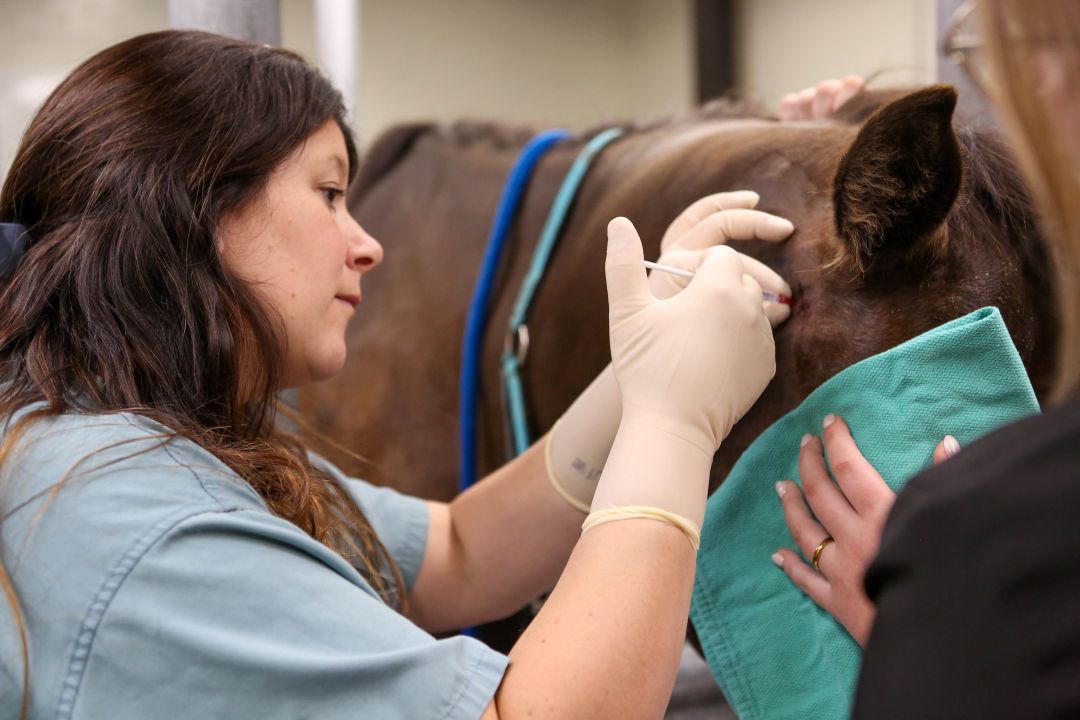
By Rigel SmithCoffee’s owner brought him to the WCVM’s Large Animal Clinic because of a laceration just below the gelding’s right ear and behind the jaw. The wound was a few days old, but it wasn’t healing. In addition to persistent bleeding, a stream of clear fluid was also leaking from the site — especially while the horse was eating.
The wound’s location was directly over the parotid salivary gland, the largest salivary gland in the horse’s body. Just like in people, a horse’s salivary glands produce saliva at a steady rate throughout the day and go into “overdrive” when they eat, describes Dr. Chris Clark (DVM, PhD). Clark is a large animal veterinarian and an associate professor in the WCVM’s Department of Large Animal Clinical Sciences.
“If there’s a laceration into one of those glands, all the saliva starts pouring out through the wound,” says Clark. “It disrupts the blood clot that’s trying to stop the bleeding, irritates the tissues, and basically makes it impossible for the wound to heal.”
Typical treatment for a laceration would include cleaning, flushing, possibly stitching, and bandaging the area. But Coffee’s veterinary team — led by Dr. Danica Wolkowski (DVM), a senior clinician in large animal surgery at the VMC — knew these methods would not be successful without addressing the leaking salivary gland.
“Initially, we turned to bandaging. but the dressings would quickly be soaked as if you had run them under a tap,” says Wolkowski. “That is a strong indicator of saliva contamination.”
The team needed a way to temporarily stop the flow of saliva to give the wound a chance to heal.
“Most of the methods to stop the flow of saliva from the gland are invasive, irreversible and can have serious complications. Our goal is always to restore normal function, if possible,” explains Wolkowski.
After searching online through veterinary journals, the team of veterinarians came across a paper that outlined a case in the United Kingdom describing a very similar situation: the horse had a parotid gland laceration, persistent saliva leakage and a wound that wouldn’t heal.
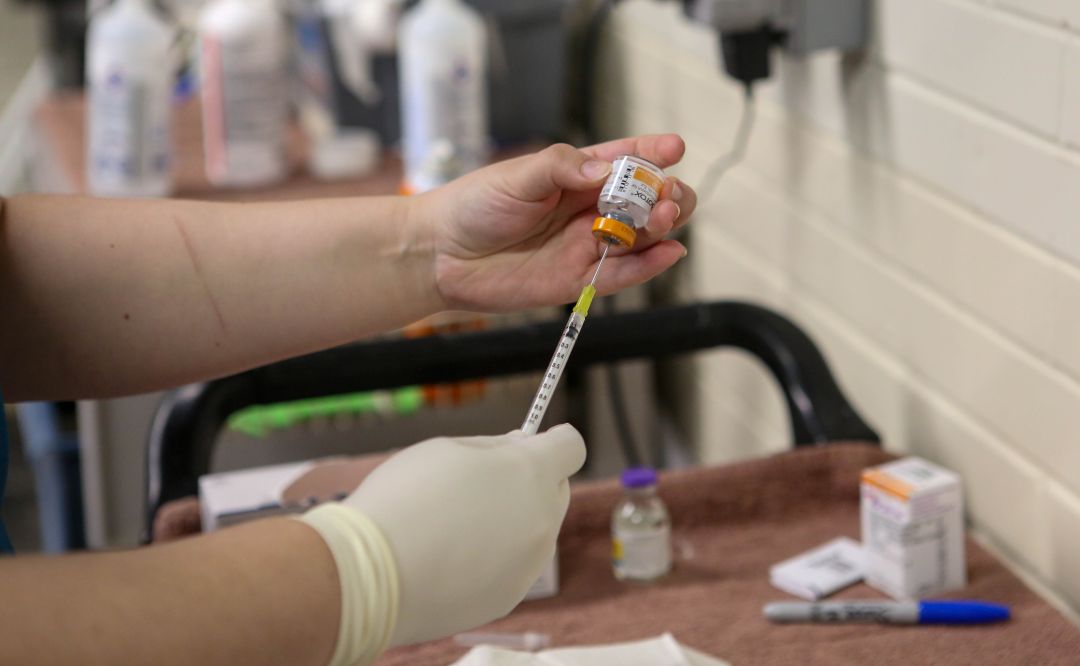
The U.K. veterinarians turned to a solution more often found in a cosmetology office or human hospital than a barn — botulinum toxin or Botox. Clark says the paper provided a detailed “road map” for the WCVM team to learn from and adapt to their case.
While many people associate Botox with cosmetic procedures, Clark clarifies that its medical uses far predate its role in smoothing wrinkles.
“Botulinum toxin is an incredibly potent substance produced by the bacteria that causes botulism — a very dangerous type of food poisoning,” he explains. “But in very small, controlled doses, it’s been used in human medicine for decades.”
The toxin blocks communication between nerves and muscles, causing paralysis. Muscles go limp and stop contracting, and in severe cases, the paralysis can spread to the muscles that control breathing and cause respiratory failure, which is what can make this toxin deadly to humans or animals that ingest it unknowingly.
Botox consists of a heavily diluted concentration of botulinum toxin that can be used to precisely target overactive muscles or glands and provide therapeutic benefit. Human physicians have used it to treat conditions such as muscle spasms and hyperactive bladders for many decades — long before it gained popularity as a cosmetic option in the 1990s and 2000s.
To explain how botulinum toxin works, think of nerves as water lines running throughout a “house” (the brain) to individual “faucets” — the muscles or glands. These faucets remain off until a signal tells them to activate. When the brain sends a message down the “pipe,” it triggers a release of chemicals at the end of the line — like turning on a tap.
Botulinum toxin interrupts that signal pathway. While it doesn’t damage the faucet or the pipe itself, it blocks the tiny chemical messengers that activate the tap. More specifically it prevents the release of neurotransmitters at the synapse — the junction between the nerve and its target tissue.
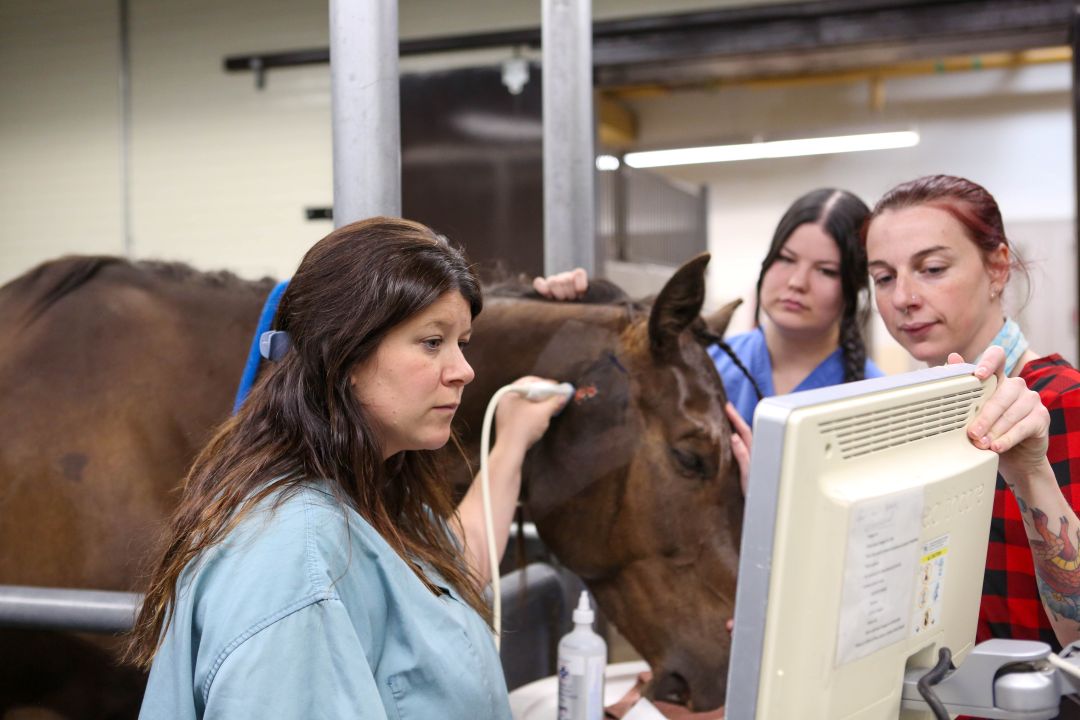
In Coffee’s case, the wounded salivary gland was like a broken tap that wouldn’t stop leaking. Guided by ultrasound imaging, Wolkowski used 20 carefully placed needles to perform Botox injections to temporarily paralyze the horse’s salivary gland.
“It was like turning off a tap,” says Clark. “It dried up almost immediately and you could literally see the healing process start.”
The effects last for approximately one month until the body rebuilds the connection and normal function returns.
“The fact that this method is relatively non-invasive, and allows the function of the gland to return, are huge benefits,” says Wolkowski.
But Botox, whether used in humans or other animals, isn’t without risks.
“You need to be very careful how much you're injecting in each site and make sure it's going into the right place,” says Clark.
While Botox will never be a go-to treatment for every wound, Wolkowski and Clark see it as a valuable option for challenging cases that involve an injury to the salivary gland.