
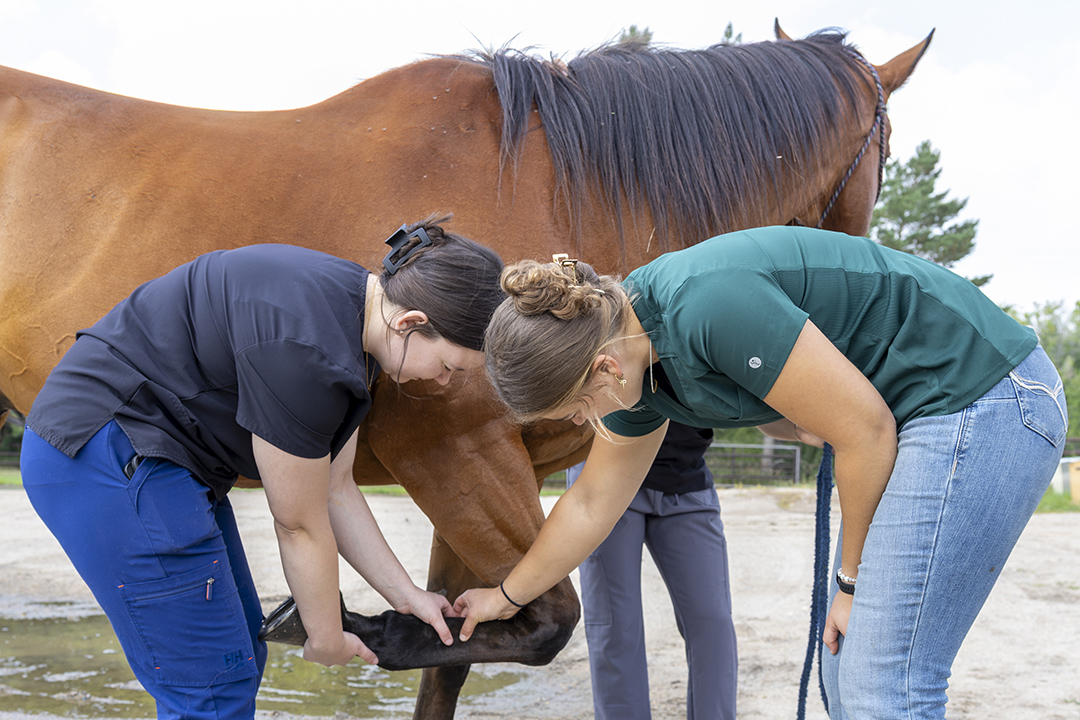
Manitoba's VetSTEP program gives veterinary students hands-on learning
The annual VetSTEP program in Manitoba pairs veterinary students with large animal and mixed animal clinics, giving them practical experience and summer employment.
By Caelan BeardDuring their summer breaks, many veterinary students at the Western College of Veterinary Medicine (WCVM) would love to expand their practical experience, but it’s not always possible for students to find work in a clinic setting back in their home province.
That’s where the VetSTEP program comes in: pairing Manitoba-based students with summer jobs at veterinary clinics.
Created by the Government of Manitoba, the VetSTEP program supports the employment of Manitoba-based veterinary students by large animal and mixed animal veterinary clinics in rural communities. In 2025, 24 veterinary students in Years 2, 3 and 4 of the WCVM’s Doctor of Veterinary Medicine (DVM) program participated in the VetSTEP program through 15 participating clinics.
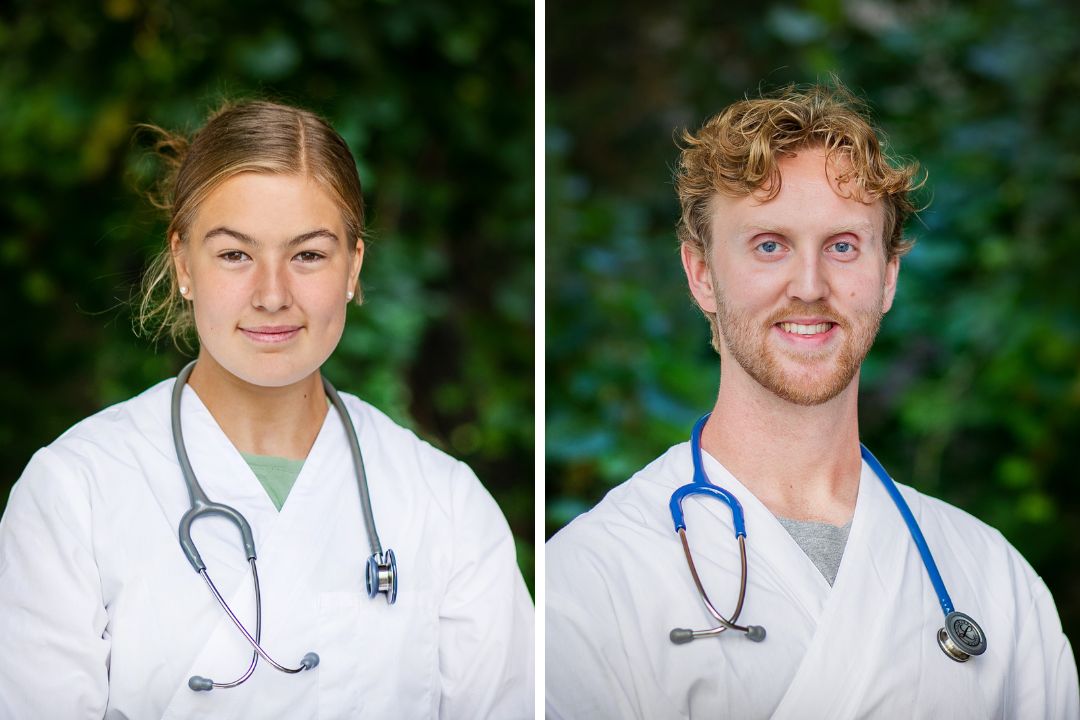
Bryan Honcharik, a third-year veterinary student from Winnipeg, Man., worked at nearby Central Veterinary Services during the summers of 2024 and 2025 through the VetSTEP program — an experience he describes as “priceless.”
As a summer student, he worked alongside veterinarians to gain hands-on experience with large animal physical exams, injections, vaccinations and even dental procedures and cow abdomen surgeries — including uterine prolapses and a caesarean section. On the small animal side, he gained experience with intubation, monitoring anesthesia, and soft tissue surgeries like neuter and spay procedures.
“From the veterinarians to the vet techs [registered veterinary technologists] to the assistants to the HR staff, everyone was just so willing to teach,” Honcharik says. “Having that time, ability to have people to learn [from] … was priceless.”
Connecting with future employers
Not only does the program give students a chance to practise their skills in a real-life setting, it also allows veterinary clinics to connect with prospective employees for future job postings.
The VetSTEP program is “like the longest working interview ever,” says Dr. Dave Snell (DVM), an owner and practitioner at Central Veterinary Services and one of Honcharik’s mentors.
Central Veterinary Services, a mixed animal practice based in the rural community of Oak Bluff, Man., has taken part in the VetSTEP program for years.
“It’s a really good way for clinics to get exposure to students and students to you,” Snell says. “Get some practical on-the-ground training and see if the clinics are going to be good for them as well.”
Providing a high level of mentorship to future veterinarians is something that’s always been a strong value for their clinic, Snell says.
“If you look at all the DVMs that we currently have working for us, I think every one of them was a student at Central or worked at Central … sometime in their past,” says Snell, a 2010 graduate of the WCVM.
He and the clinic’s other owners — including Drs. Stephanie Van Deynze-Snell and Samyra Stuart Altman — all went through the VetSTEP program at Central Veterinary Services when they were WCVM students.
“It is really beneficial, I think, for the students to work in vet clinics in the summer, instead of having to go out and find other jobs to help subsidize their education,” Snell says.
Without the VetSTEP program, Honcharik says “it would be harder to get a job at a clinic.” Through the program, Manitoba Agriculture provides grant assistance to eligible clinics that are responsible for hiring and overseeing their own students.
If clinics didn’t have the subsidies for hiring summer students, Honcharik thinks there would be more competition for fewer jobs.
The program has been key for his learning, making him feel extremely prepared for his future career.
“I had a really good experience with Central … it kind of projected my career path into the mixed animal setting.”
Encouraging rural practice
If recently graduated veterinarians haven’t spent time working in a rural setting, it can ultimately become a deterrent for them to start working in rural Manitoba communities, many of which are experiencing a shortage of veterinarians.
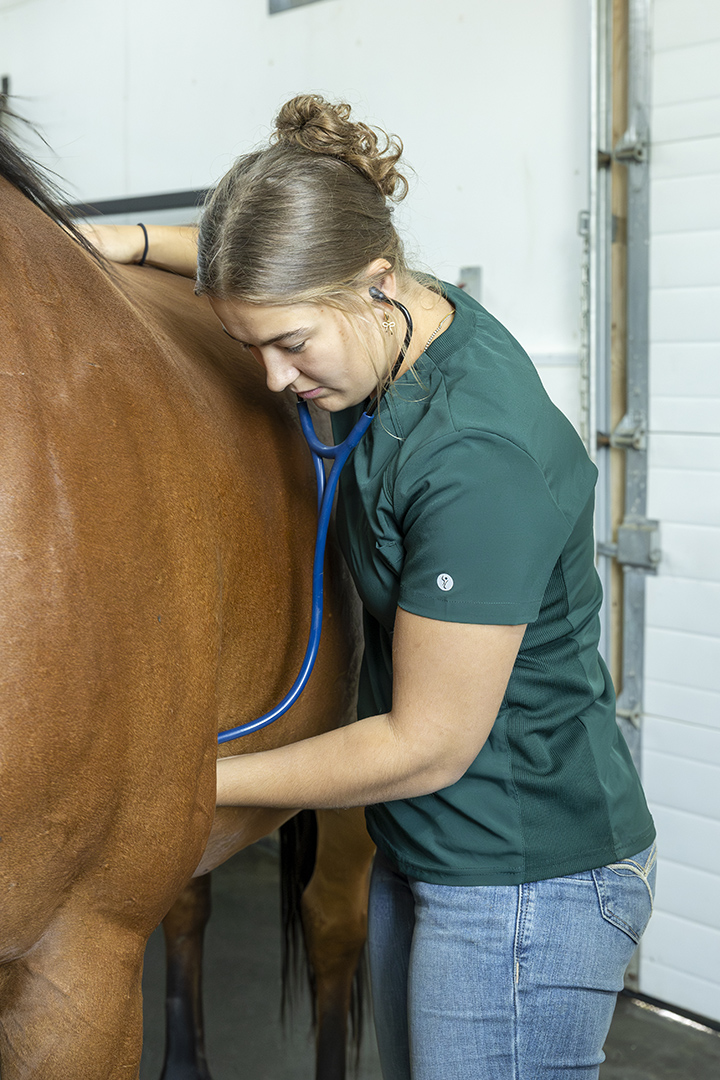
The VetSTEP program gives WCVM students like Helen Born that experience working in rural areas and encourages them to consider a career there.
Born, a third-year veterinary student from Souris, Man., grew up on her family’s grain farm with a passion for large animals, including horses and cows.
Through the VetSTEP program, she spent the summer of 2025 working at the Virden Animal Hospital, a mixed animal practice clinic in Virden, Man. During her summer experience, the clinic’s veterinarians rotated her between equine medicine, bovine medicine, small animal medicine and small animal surgery.
“Even going into third year, it gave me more confidence with the material that I learned,” Born says.
Seeing cases in person helped her to understand the practical application of skills that she learned in class, and she had the chance to see different cases than she would in an urban-based clinic. Having that experience increased her understanding of the scope of mixed animal practice and what day-to-day life is like as a rural veterinarian.
Born has already mentioned the VetSTEP program to some of the first- and second-year students at the WCVM, and she “would totally recommend it to them, especially in a rural practice.”
“It really did prepare me and open my eyes,” Born says. “It’s helped me a lot.”
The application deadline for employers to apply for a grant through the VetSTEP program for the summer of 2026 is Jan. 16. Click here to learn more. If students have questions or need support to secure a Manitoba-based summer employment spot under the VetSTEP program, email vsd@gov.mb.ca.
Caelan Beard is a freelance journalist, communications specialist and author. She lives in southwestern Ontario.
Together we will support and inspire students to succeed. We invite you to join by supporting current and future students' needs at USask.