
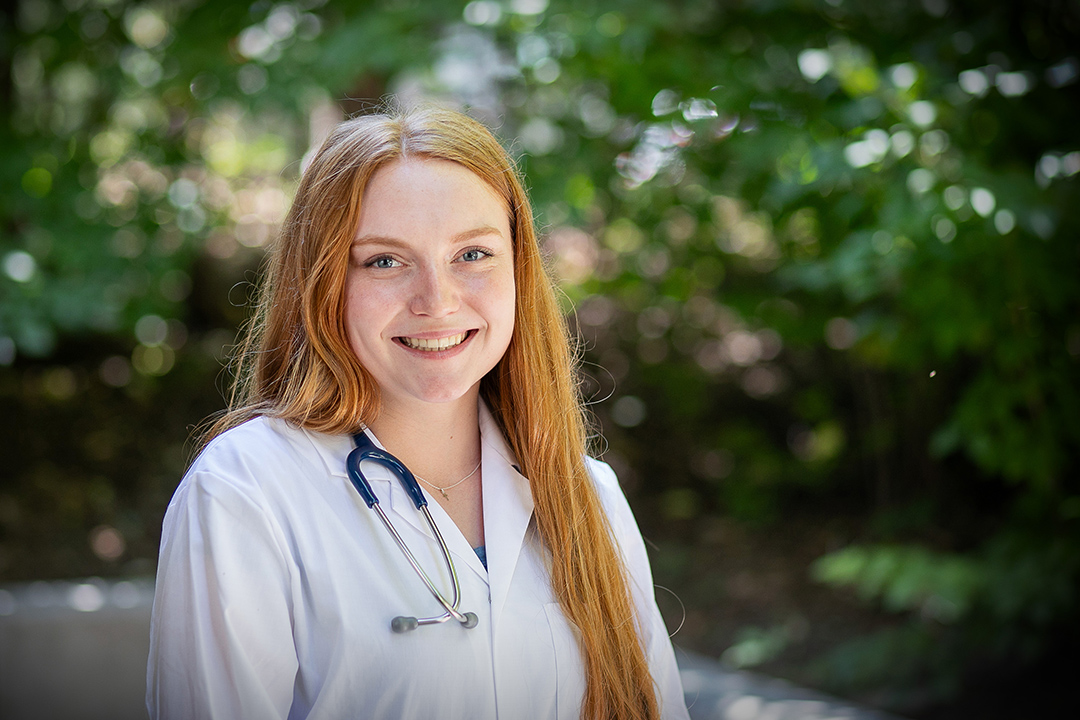
Saskatchewan student brings a variety pack of experience to vet school
Hannah Hjorteland of Macoun, Sask., grew up on her family’s organic grain farm where she was surrounded by various livestock and pets — horses, goats, sheep, poultry, dogs, cats and parakeets.
By Lynne Gunville“I enjoyed working with my horses, and I especially loved spending time in the barn during lambing season,” says Hjorteland, who developed a special interest in handling and caring for hair sheep — sheep breeds that produce hair instead of wool.
“I also valued teaching my family and friends [about] different processes around the farm which reflected my own belief in the importance of agricultural and veterinary education for the public.”
As a member of a local light horse 4-H club, Hjorteland enjoyed exchanging information and support as she and other 4-H members participated in weekly rides, local competitions and community volunteer projects.
She vividly remembers being impressed by the local veterinarians and their interactions with members of her family as they treated one of the family’s horses.
“Witnessing how knowledgeable and supportive the veterinarians were truly inspired me to pursue this career and to one day become the kind of cornerstone that veterinarians are to so many communities,” says Hjorteland, who began her first-year studies at the Western College of Veterinary Medicine (WCVM) in August 2025.
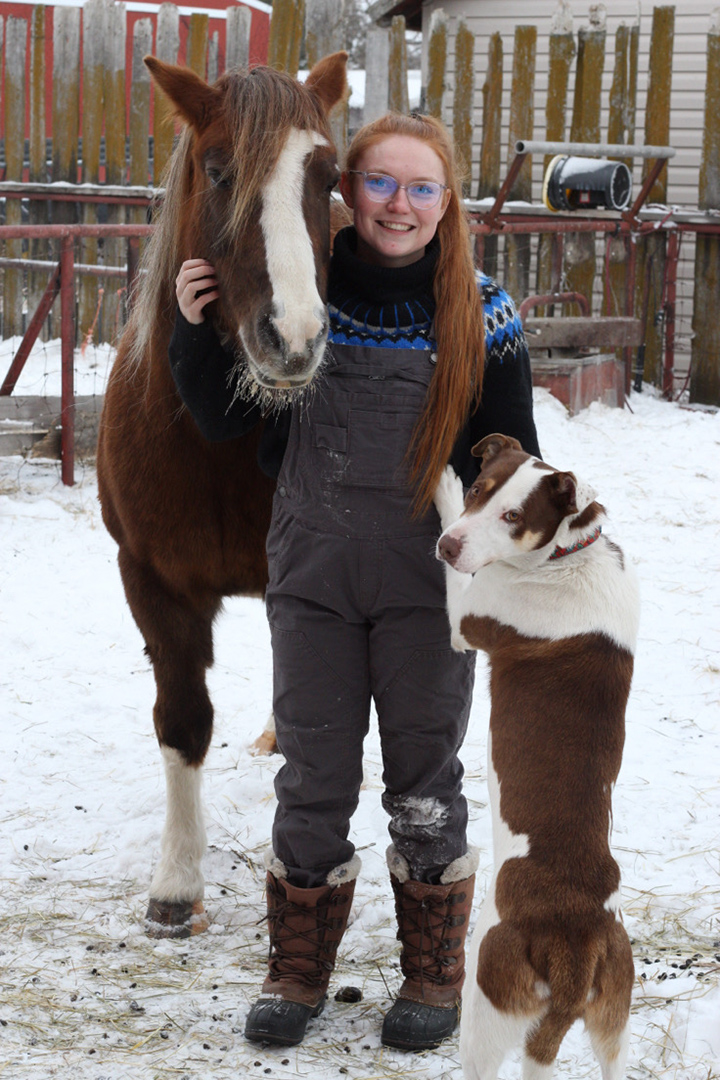
After working at Prairie Animal Health Centre of Estevan while she was in high school, Hjorteland began exploring different aspects of veterinary medicine and developing a broad base of knowledge and experience.
While attending the College of Agriculture and Bioresources at the University of Saskatchewan (USask), she volunteered in the small animal rehabilitation program at the WCVM Veterinary Medical Centre.
“I assisted the team with new and (sometimes) apprehensive dogs, helping them become more comfortable,” says Hjorteland. Spending time with the patients and staff was always the highlight of her week: “Seeing these dogs recover physically, gain confidence and grow excited to see the team was incredibly rewarding.”
Hjorteland also worked on a cutter bee farm, and she interned at a swine genetic nucleus farm where she worked in the various stages of swine production — breeding, farrowing, nursery and grow/finish.
During university, Hjorteland volunteered at a special care home with residents with dementia, an experience that taught her patience and empathy. It also helped her practise how to communicate and care for those who cannot always express their needs — skills that she considers important for her future career.
Hjorteland already has ideas about what she would like to do after graduation. She expects to work in a mixed animal practice — ideally one that’s close to home so she can support her home community and continue to farm and raise livestock.
Hjorteland recalls her excitement when she learned that she had been accepted into the WCVM’s veterinary program — particularly the moment that she shared the news with her grandfather.
“He [Grandpa] had wanted to become a veterinarian when he was my age, but unfortunately life got in the way. Sharing that moment with him was incredibly special,” says Hjorteland. “He had been so supportive throughout my undergrad years, and I was so happy to make him proud.”
Together we will support and inspire students to succeed. We invite you to join by supporting current and future students' needs at USask.