
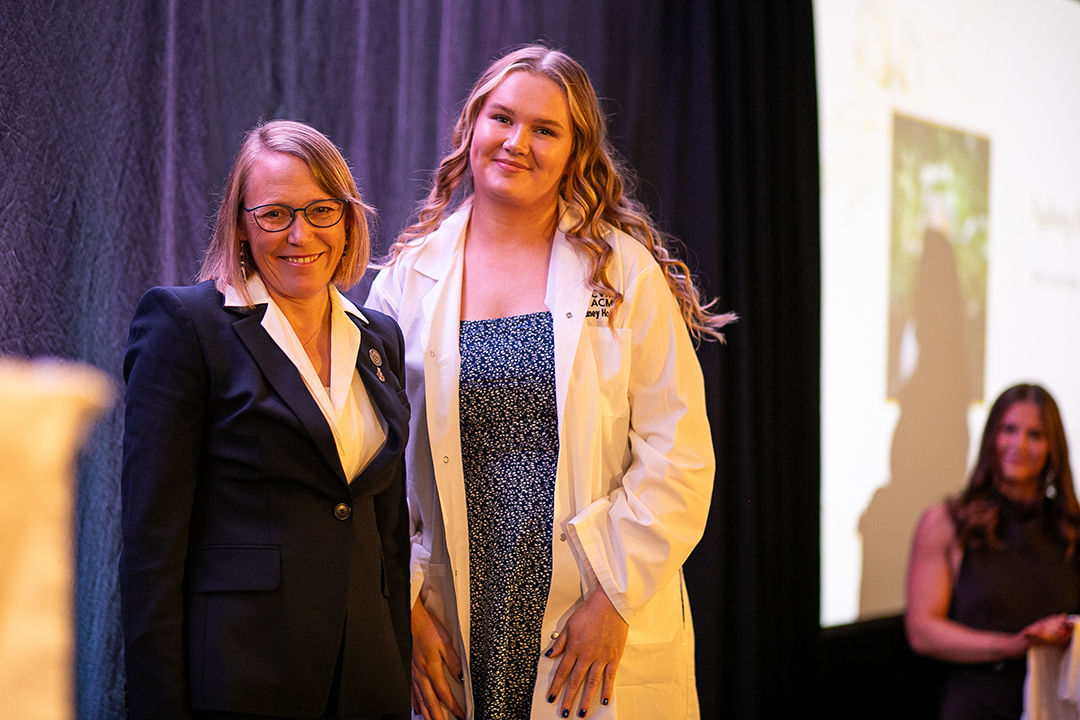
WCVM alumnus leads Canada’s veterinarians through an era of change
Small animal veterinarian Dr. Tracy Fisher (DVM) talks about her path to the presidency of the Canadian Veterinary Medical Association (CVMA), the challenges facing the veterinary profession, and what gives her hope for the future.
By Caelan Beard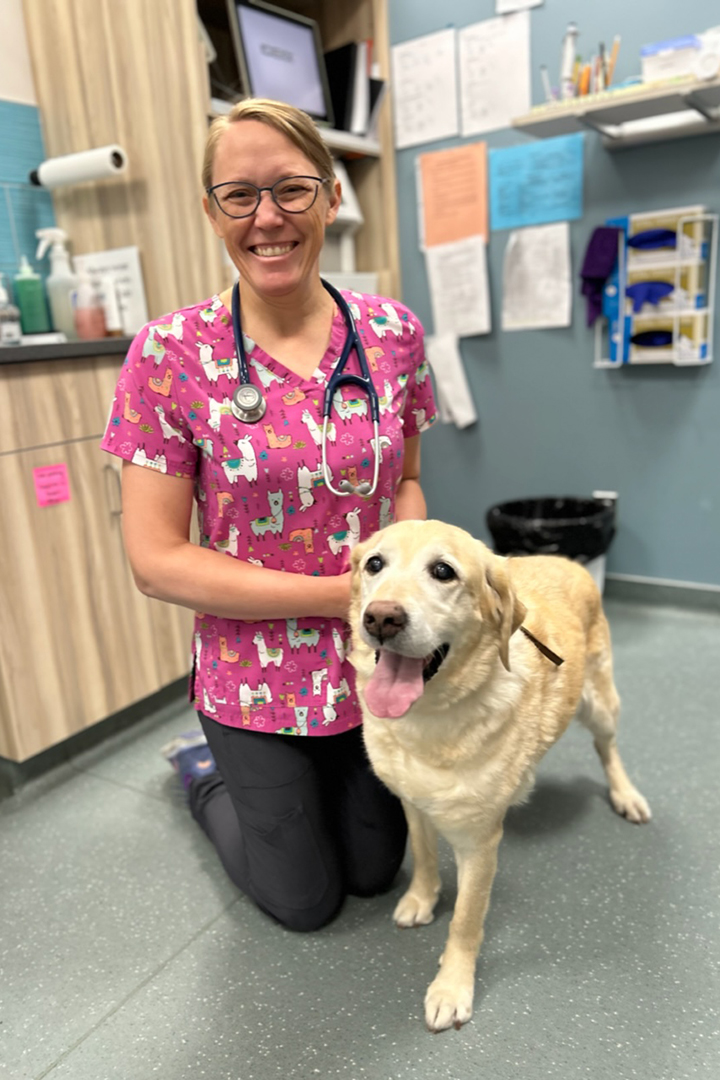
Like many kids, Dr. Tracy Fisher (DVM) loved animals while growing up in Calgary, Alta.: “I wanted to be a cowgirl, but that didn’t pan out.”
Inspired by the iconic books written by Dr. James Herriot, a well-loved British author and veterinary surgeon, Fisher decided that the next best thing was to become a veterinarian.
A 1997 graduate of the Western College of Veterinary Medicine (WCVM) at the University of Saskatchewan, Fisher has practised as a small animal veterinarian in Regina for nearly three decades. Most of her career has been based at Albert North Veterinary Clinic — a small animal practice that she co-owned for many years and where she continues to practise as a part-time associate.
In June 2025, Fisher was elected for a one-year term as president of the Canadian Veterinary Medical Association (CVMA) — a national organization that represents more than 25,000 veterinarians and registered veterinary technologists or technicians (RVTs) across the country.
“It’s a great honour to be able to represent our profession, nationally and throughout the world,” says Fisher.
Her path to the CVMA presidency started just a few years after graduation when Fisher began volunteering with the Saskatchewan Veterinary Medical Association (SVMA). She eventually joined several of the provincial organization’s committees, served on the SVMA Council, and completed a one-year term as SVMA president in 2004-05.
Fisher has been the Saskatchewan representative on the CVMA Council for many years, and on a more local scale, she also served as president of the Regina Association of Small Animal Practitioners.
“I really enjoy volunteering for the profession and giving back,” she says. “It’s something I’ve done my whole career.”
As CVMA president, Fisher is proud to push forward some key issues for Canadian veterinarians. She’s been leading efforts aimed at providing mental health and wellness offerings for CVMA members who are facing a nation-wide shortage of veterinary professionals. Fisher is lobbying for more government funding to increase the number of seats in Doctor of Veterinary Medicine (DVM) programs across Canada. She’s also asking for increased support of the country’s national testing program for foreign-trained veterinary graduates.
Fisher encourages anyone who is considering volunteering for veterinary organizations to do so: “We need active participants, and the more voices and the more diverse those voices are at the table, the better off we’re going to be.”
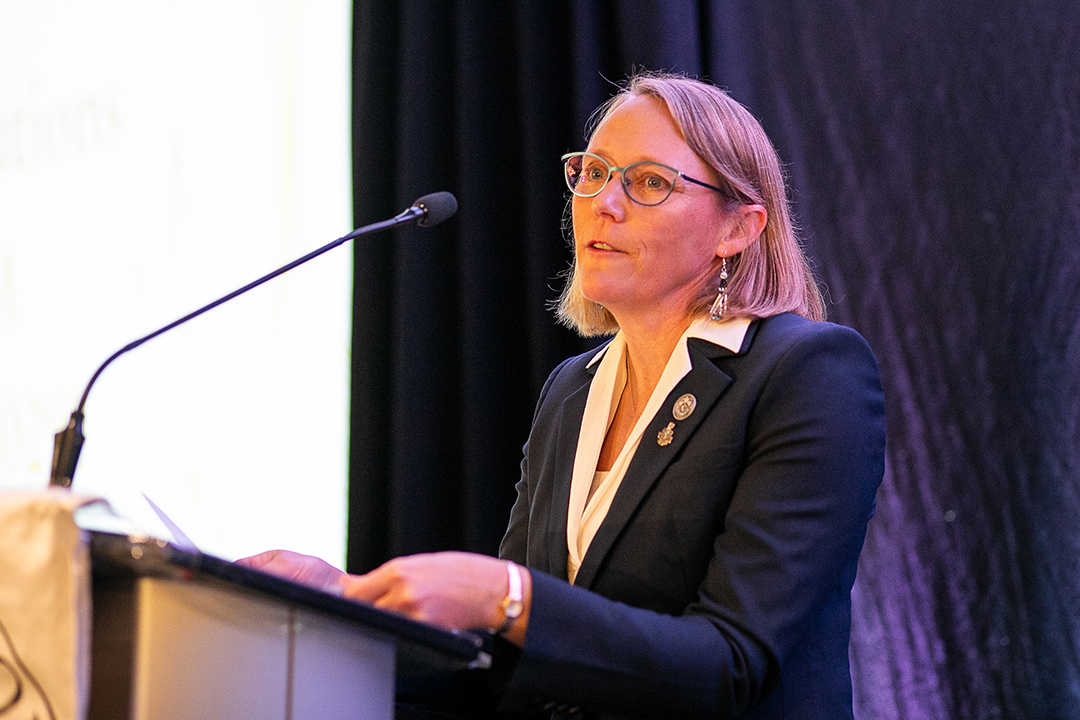
The profession is facing difficult situations related to the changing nature of veterinary practice, points out Fisher. For example, it’s daunting for clinical teams to explain the rising cost of animal health care to their clients. People understand that inflation is affecting everything, but Fisher notes that they don’t seem to realize how it also affects veterinary bills.
“It’s really challenging to meet up with folks who can’t afford the [veterinary] care that they want — or sometimes any health care — for their animals,” says Fisher.
In recent years, public trust in veterinarians and their decisions about animal care has also been challenged to a degree.
“I would say that sometimes it’s more challenging dealing with people nowadays because of the internet,” says Fisher. She adds that clients used to be more willing to talk things through and have productive discussions with their veterinarians. “People tend to be a lot more reactive now than they used to be.
“We have this expectation that veterinarians are always going to be there for people, and we’re going to be available 24/7, and everybody’s going to be able to afford our services,” Fisher says. “That’s unfortunately just not deliverable in some cases. Trying to manage those expectations is difficult.”
These challenges aren’t unique to Canada — Fisher says veterinarians are grappling with the same issues across the United States as well in Europe, Australia and New Zealand.
What contributes to these issues in Canada is a stark reality: the country isn’t graduating enough veterinarians to meet its domestic needs.
“That needs to change,” says Fisher, stressing that Canada needs to be able to train its own veterinarians. Funding is also needed to help internationally trained veterinarians obtain their general licences, support their “onboarding” in the Canadian profession, and help them adapt to North American markets.
Fisher also believes that Canada’s veterinary profession needs to make better use of the abilities and training that all RVTs bring to their clinical teams.
“Veterinarians cannot and should not do it all. We need to leverage our RVTs to the maximal level of their licence, and we need to graduate more RVTs,” says Fisher. But the industry also needs to “pay them [RVTs] better and well for what they do in order to retain them in the profession.”
Despite the issues facing veterinarians, Fisher doesn’t get discouraged by the challenges ahead. She finds hope in the number of people who still want to a pursue a career in veterinary medicine as well as many others who are committed to making the profession stronger.
“Veterinarians are very invested in trying to make things better. Most veterinarians that I encounter are very problem-solving oriented. They’re looking for solutions, and they’re willing to talk about change to achieve those outcomes,” says Fisher.
“I think whenever you have that combination, things will change, and I think we will be successful in the long run. We’re in a time of adaptation, and we need to try some new things and see what works.”
Caelan Beard is a freelance journalist, communications specialist and author. She lives in southwestern Ontario.
Together we will support and inspire students to succeed. We invite you to join by supporting current and future students' needs at USask.