

Tracking Trichinella: USask graduate investigates cryptic Arctic parasite
A newly discovered species of parasite circulating among Arctic carnivores is shaping the research and career of Dr. Cody Malone (PhD), who received his PhD degree and the top graduate thesis award (life sciences category) at the University of Saskatchewan (USask) Spring Convocation on June 3.
By Cat ZensA parasite called Trichinella chanchalensis (T. chanchalensis) became the centre of Malone’s four-year journey that led him from studying zoonotic diseases in his home province of Ontario to collecting and analyzing parasite samples in Canada’s North.
As an undergraduate student studying public health at Brock University in St. Catharines, Ont., Malone found himself drawn to parasitology—a field that is often neglected, especially in the global North.
“Parasites are often overlooked, but they’re so fascinating, with many visible to the naked eye,” said Malone. “Their complexity and unique challenges are what drew me to parasitology.”
This fascination led him to pursue a master’s degree in infectious and zoonotic diseases at Brock, and eventually to a PhD program at USask where he joined the lab of Dr. Emily Jenkins (DVM, PhD) at the Western College of Veterinary Medicine (WCVM). Jenkins is a professor and zoonotic disease expert in the college’s Department of Veterinary Microbiology as well as co-lead of the USask One Health signature area of research working at the interface of animal, human and environmental health.
In 2020, while working on wolverines in Yukon, Dr. Rajnish Sharma (DVM, PhD) came across a new species of Trichinella that had been missed for many decades due to method limitations and difficulties in sampling wildlife in remote regions of Canada.
Two factors make this genus of parasitic roundworms notable: it’s zoonotic (can be transmitted from animals to people), and it’s a federally regulated animal disease for trade purposes. Trichinella is unique because it only transmits through carnivores, meaning a meat-eating animal needs to consume meat from another carnivore to become infected. When humans eat the meat of infected animals, they can become sick with a foodborne illness called trichinellosis.
Following ingestion, tiny Trichinella larvae that lurk inside the muscle are released by digestion. The larvae break out of their cysts and grow into adult worms in the host’s intestine. The cycle continues when the worms mate and release new larvae into the host’s bloodstream.
“[The larvae] then hitch a ride in the circulatory system back out to the body where they set up and encyst in the muscle of the host, causing muscle pain and inflammation,” said Jenkins.
Since the heart is also a muscle, she cautioned that trichinellosis can be a serious and even a life-threatening disease in people.
Trichinella chanchalensis, the 13th known species of the parasite, was named after the Yukon mountain range where it was discovered following consultation with an Indigenous Knowledge Keeper from the region. The new species was also detected in wolverines from the Northwest Territories.
After Sharma completed his PhD project on T. chanchalensis, Malone took on the task of learning more about the mysterious parasite and answering key questions. Where else can it be found beyond Yukon and the Northwest Territories? What animals carry it besides wolverines? And, like other Trichinella species found in the North, does it survive freezing—an important food safety consideration?
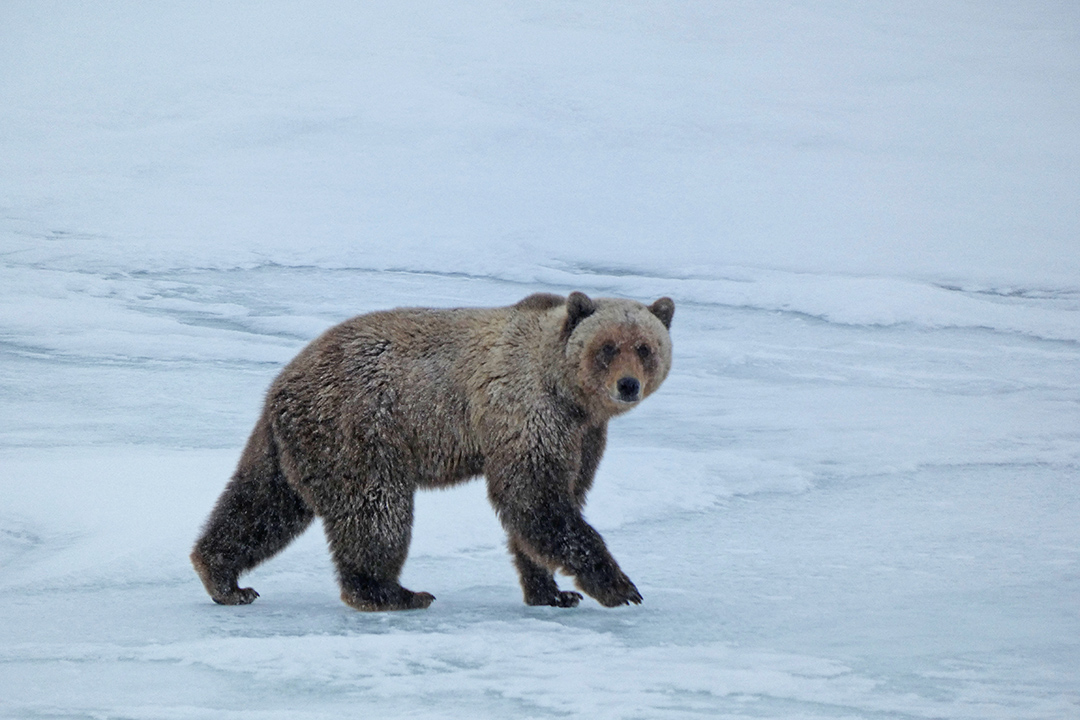
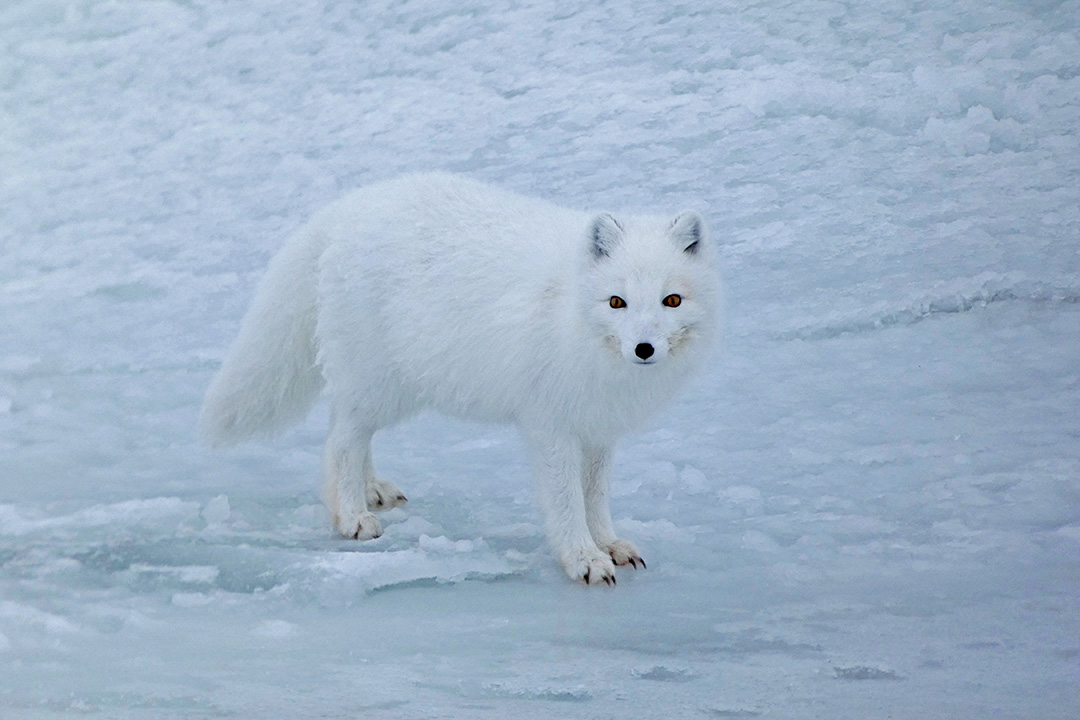
Malone’s first step was to collect tissue samples from animals harvested in the Northwest Territories, Yukon, Nunavut, and Alaska and test for the presence of T. chanchalensis. He targeted wild carnivores including polar bears, grizzly bears, black bears, wolves, wolverines, red foxes, Arctic foxes, lynx, and coyotes.
Gathering these samples required collaboration with wildlife veterinarians, biologists, hunters, trappers, and Indigenous groups throughout the North. While many collaborators shipped samples to USask for analysis, Malone also participated in necropsies during visits to northern communities. After his research analysis was done, Malone returned to these communities to share results and how the animals’ tissue samples aided his research.
“Because it’s such an interesting parasite and of food importance for northerners and Indigenous peoples, you have to take a really holistic approach,” he said. “[These communities] were very grateful and excited to see the results and were happy to share important feedback and insights, concerns, and interests for what can be done in the future.”

As Malone soon discovered, he and his collaborators had much to share. In addition to the Northwest Territories and Yukon, T. chanchalensis was also found in tissue samples collected from wolverines in Nunavut and Alaska. He also discovered the species in three new host species: wolves, coyotes, and lynx. Because some of these animals live outside of the Arctic, the findings suggest T. chanchalensis could potentially exist in other parts of the Americas.
Malone also conducted experimental infections in mice and confirmed that T. chanchalensis is freeze-tolerant—meaning that freezing meat doesn’t kill the parasite. For northern communities that rely on game meat, this information is critical.
“The only way you’re going to kill [the parasite] is through cooking,” Jenkins said, which isn’t always culturally appropriate.
This reinforces the need to continue supporting food safety testing for wildlife to protect Indigenous people’s rights to harvest and consume their traditional foods—especially bears that are commonly linked to outbreaks of trichinellosis.
In future projects, researchers will determine if T. chanchalensis exists further south than the Arctic regions of North America. Another goal is to conduct genetic analyses comparing northern Trichinella species so scientists can better understand the parasite’s evolutionary history.
For Malone, his PhD work helped him build strong connections with northern communities that will only strengthen future research.
“With the research being so important for northerners, it’s been such a unique and rewarding opportunity to go there and share the results and hear their stories and insights,” Malone said.
“It's continuing to be useful for future research, and [it’s] creating trust and collaboration with the communities that I think will be very valuable.”
Malone received the Wildlife Disease Association's 2026 Graduate Student Research Recognition Award for his efforts.