
Can soybeans counteract ergot’s effects on cattle health?
Soybeans are the focus of a University of Saskatchewan (USask) research study that’s exploring a legume crop’s potential for counteracting the negative health effects of ergot-contaminated feed in beef cattle.
By Aiden Wallace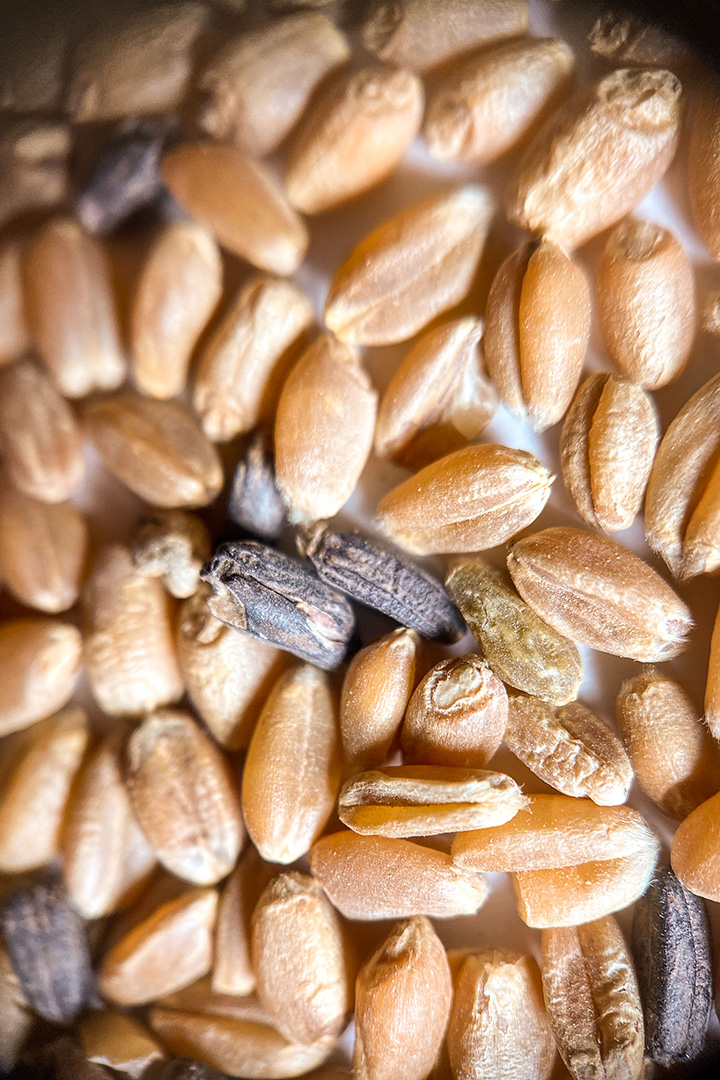
Ergot alkaloids are toxic compounds produced by a type of fungus (Claviceps purpurea) that thrives in cold and moist environments. In the past decade, ergot contamination has become more prevalent in forage and cereal crops grown in Western Canada. Ergot mainly affects cereal grains like wheat, barley and rye.
Dr. Vanessa Cowan (DVM, PhD) is a veterinary toxicologist and assistant professor at the Western College of Veterinary Medicine (WCVM) on the USask campus, is conducting a study focused on ergot exposure in beef cattle. Cowan and her team aim to determine if soybean meal can be used as a safe and cost-effective way to reduce the negative health effects of ingesting ergot-contaminated feed.
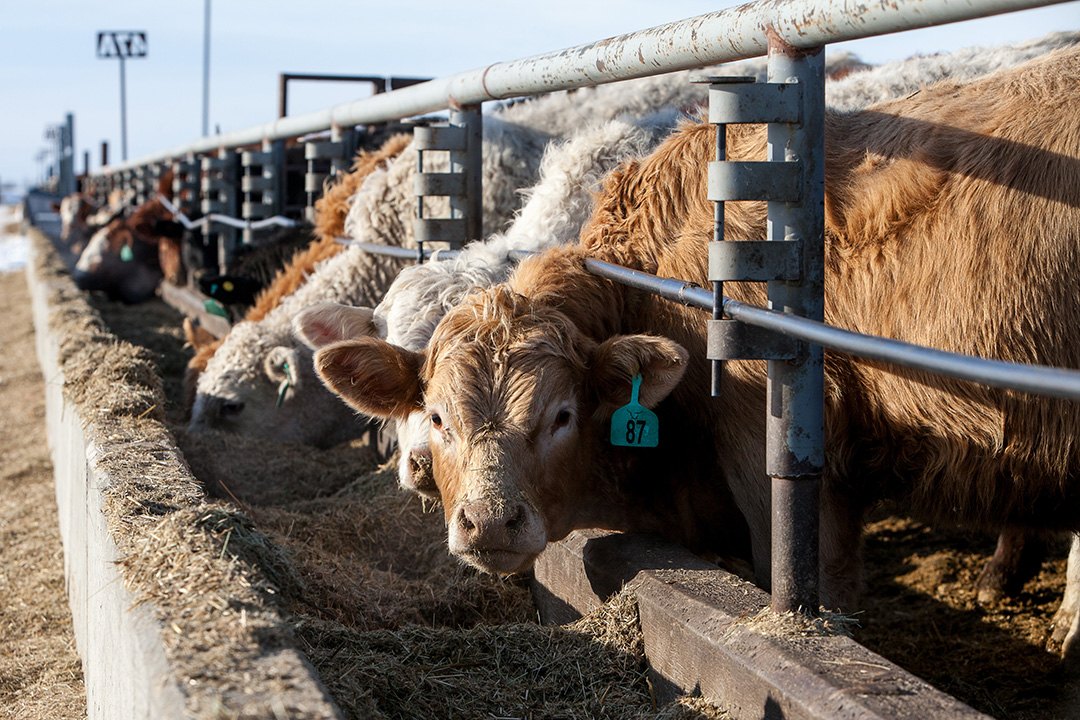
When cattle ingest ergot-contaminated grain, the ergot alkaloids cause a narrowing of the animals’ blood vessels. This outcome reduces the amount of blood circulating through their bodies, especially in their extremities including hoofs, tails and ears.
In serious cases, blood vessel constriction can cause a loss of sensation, gangrene (death of tissues caused by lack of blood flow), and sloughing (shedding) of hoofs and other tissues that are in the affected area. Humane euthanasia is the only option for severely affected animals.
While ergot alkaloids are screened out of grains destined for human use, the screening process is less stringent for grains used in livestock feed — leading to higher levels of ergot contamination.
Canada’s standards for biological contaminants such as ergot allow low levels of exposure in livestock feed, but these standards may give producers a sense of false security.
Ergot-contaminated cattle feed is a growing issue for producers across North America, potentially costing them millions of dollars in lost profits each year. The most frustrating challenges are the less visible impacts of low-level exposure to ergot in beef cattle herds. Cattle that regularly consume ergot-contaminated feed are prone to eating less, resulting in less weight gain and lower returns for producers.
Ergot contamination can also cause reproductive issues in cattle, which can reduce the growth of beef herds and increase economic losses for the producer.
As Cowan explains, the main issue is that once cattle ingest ergot-contaminated feed there is no medication or vaccine that can prevent the effects of the toxin.
“What most producers must resort to is getting rid of the feed that’s contaminated. But in times when that isn’t an option, there’s still no direct counter to the effects that ergot has on cattle,” says Cowan.
She also points out the increasing prevalence of ergot alkaloids, thanks to an unfavourable weather cycle experienced in Western Canada during the 2025 growing season.
“Ergot contamination can fluctuate based on the environmental conditions in the growing season of susceptible crops. This past growing season had favourable conditions for ergot, so the contamination of feed has been very high in some areas.”
Recent research from the University of Kentucky has shown that phytoestrogens, a molecule found in certain plants, is effective in widening or dilating constricted blood vessels. These phytoestrogens appear to be highest in legume plants such as soybeans and red clover.
In response, researchers in the United States are investigating how phytoestrogens found in red clover could help to increase the width of blood vessels in cattle and allow for normal blood flow to affected areas. But there’s a catch: in red clover, the phytoestrogens are “tangled up” in other molecules, which doesn’t give the animal immediate access to their blood vessel dilation capabilities.
For Cowan, soybeans hold more promise — namely because the phytoestrogens inside a soybean plant are “free” and not connected to other molecules, meaning that the animal can use the phytoestrogens much faster and more efficiently.
If soybeans are effective in counteracting the effects of ergot, it could lead to a greater demand for Canadian-grown soybeans. According to Statistics Canada, nearly 30,000 Canadian farmers seeded 5.7 million acres of soybeans in 2024, with annual exports of soybean seed, oil and meal totalling 5.5 million metric tonnes.
Cowan and her research team are now studying the option of adding soybean meal to ergot-contaminated feed as a possible solution for cattle producers who can’t afford to discard their current feed supplies.
They plan to test this idea in a research trial beginning in summer 2026. Using 48 cattle at the USask Livestock and Forage Centre of Excellence (LFCE), the trial will involve three groups of cattle: one group will receive a diet including ergot-contaminated feed, a second group of cattle will receive both ergot-contaminated feed and soybean meal (isoflavones), and a third group will act as a control (no ergot-contaminated feed or isoflavones). The team will then measure the animals’ blood vessel diameter (width) and blood flow to their hoofs using Doppler ultrasonography — comparing results between the three groups.
Although the trial won’t begin until the summer, Cowan and her team have already made strides toward their goal by successfully isolating the isoflavones from the soybean meal — a promising indicator for the rest of their research work.
This research project is financially supported by the Saskatchewan Agriculture Development Fund.
Aiden Wallace of Dundas, Ont., is a USask Master of Science (MSc) student based at the Western College of Veterinary Medicine (WCVM). His supervisor is Dr. Vanessa Cowan.
Together, we will undertake the research the world needs. We invite you to join by supporting critical research at USask.