
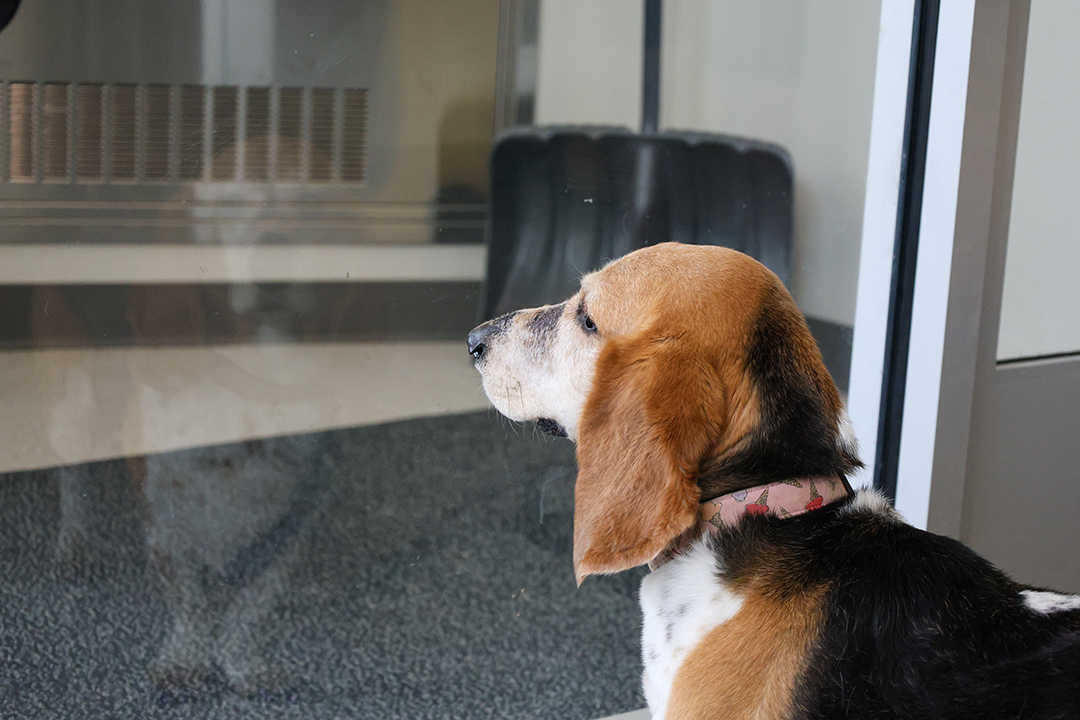
Suzy’s gift: dog owner gives back after cancer treatment success
After watching her dog Suzy receive life-changing cancer treatment from the Western College of Veterinary Medicine’s (WCVM) veterinary oncology team, Eryn Audette knew she wanted to give back.
By Cat Zens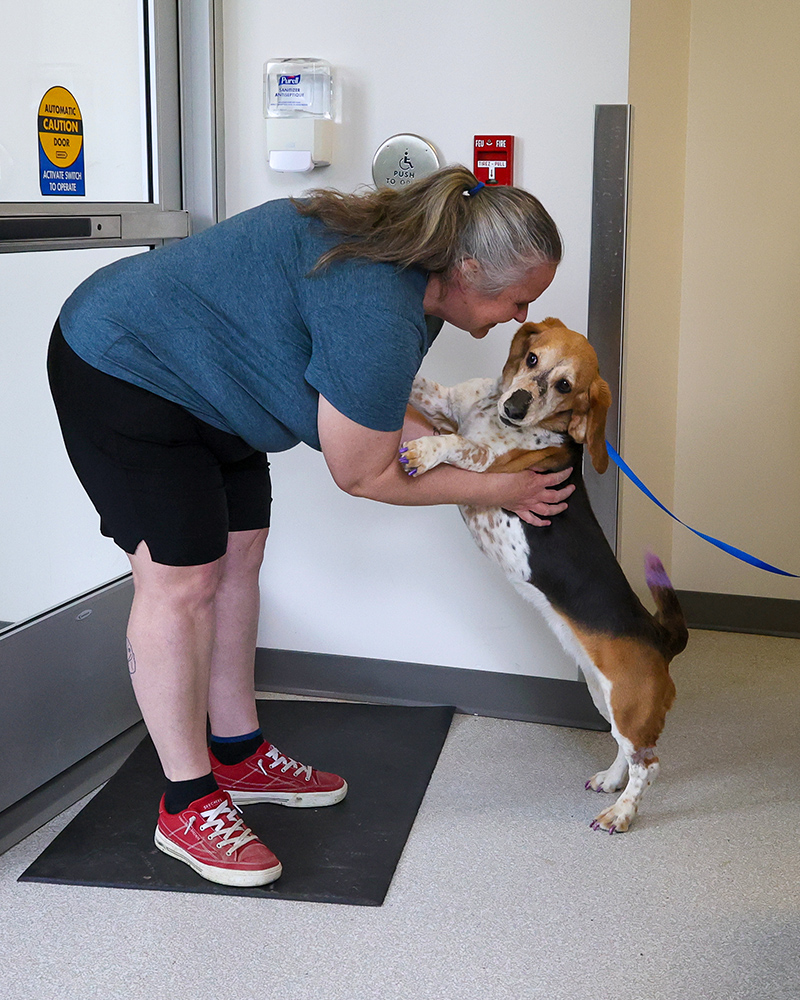
Audette is a Regina pet owner who trains dogs for scent detection, a specialized skill where dogs are trained to identify and locate specific odours. One of her star pupils is Suzy, her own dog. The spunky and sassy 10-year-old basset hound is known in her scent detection community as the “ruler of all dogs.”
Suzy has spent her life excelling in scent detection, as well as flyball — a relay-style sport where dogs race to jump over hurdles and retrieve balls for their handlers. Trained from just six months old, she’s not only a top competitor in these sports but is also Audette’s trusty companion — all reasons that made Suzy’s cancer diagnosis hard to process.
Last fall while attending a scent detection competition in Winnipeg, Audette noticed blood dripping from Suzy's nose. Concerned by the bleeding as well as her dog’s frequent sneezing and breathing difficulties, she brought Suzy to her local veterinarian.
When diagnostic testing revealed a nasal tumour, Audette’s veterinarian referred Suzy to the WCVM Veterinary Medical Centre’s oncology service for treatment.
Gratitude sparks fundraiser
For Audette, Suzy’s experience with the WCVM oncology team has been overwhelmingly positive.
“I was blown away with how understanding, caring and supportive they were — from the student doctor I saw (veterinary medical oncology resident Dr. Ali Hatamkhani) to my actual oncologist,” said Audette.
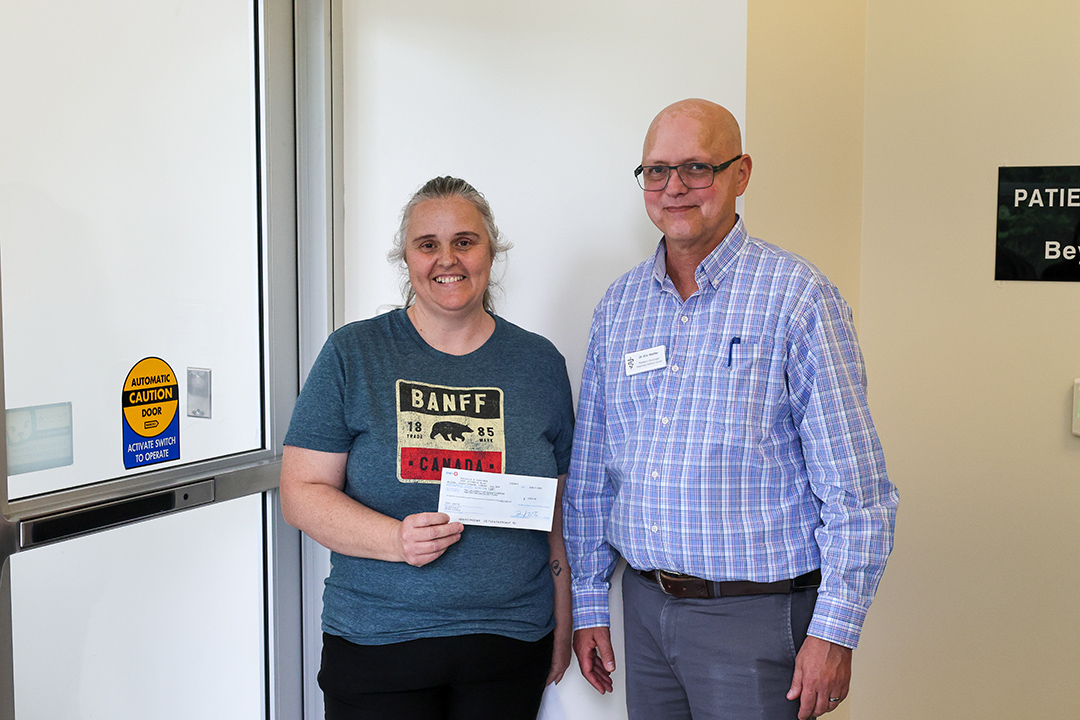
That person is Dr. Eric Walther (DVM), a board-certified radiation oncology specialist at the veterinary teaching hospital. Since nasal tumours are often difficult to remove surgically, Walther recommended radiation therapy as the best option for Suzy, whose tumour disappeared after treatment.
“I know a lot of people with dogs who have had cancer, and simply from my journey with Suzy, I wanted to do something to give back to the college,” said a grateful Audette, who organized a raffle for her scent detection club, HD Scent Detection.
After reaching out to businesses across Canada, she secured donations for 40 raffle prizes. With support from the scent detection community, the fundraiser raised $2,000 for the WCVM's Inspiration Oncology Fund.
Created in memory of a golden retriever named Inspiration, the fund supports canine cancer research conducted at the college, improving outcomes and quality of life for dog patients.
'It gave me my dog back'
Suzy’s case coincided with the launch of the hospital’s new linear accelerator, which began operating in December 2025. That timing led to Suzy becoming the first patient treated using the brand-new machine.
“With this, we’re able to deliver state-of-the-art radiation therapy treatments and help animals keep control of the tumours without causing terminal side effects,” said Walther.
Radiation works by damaging the DNA in the cancer cells. After treatment, as tumour cells divide and make more tumour cells, the cells die from radiation. Then, after a few weeks or months, the tumour’s size reduces and can eventually go away.
Suzy's treatment began with a CT scan that mapped her nasal tumour in detail. Her oncology team created a custom thermoplastic mask to keep her perfectly still during each treatment session. Using the linear accelerator, Walther delivered targeted radiation from multiple angles. The machine's advanced technology allows it to precisely focus radiation on the tumour while limiting exposure to surrounding healthy tissues, reducing the risk of side effects.
“Because we can be so precise with our CT scans and this machine, we can deliver radiation faster and we can deliver more of it so we can cut down the total number of treatments,” said Walther.
In Suzy’s case, after receiving three radiation treatments over the course of one week, Audette was able to take her dog home.
“That really opens up the possibility for people from a long way away to come in and do the treatment [in a short amount of time],” said Walther. “It makes it more accessible for people.”
Suzy experienced positive results post-treatment: she stopped sneezing and could breathe easily again. And after Audette took her to a follow-up scan months later, the tumour had shrunk significantly, and all clinical signs associated with the mass had disappeared.
“She’s a completely different dog,” said Audette. “We go for hikes and she’s [now] off leash and running in the fields. She’s so happy now, so I’m very thankful.”
For Walther, this is his goal when delivering radiation therapy treatments: improving quality of life for pets and their owners.
“We’re not just treating them to keep them alive for a little bit longer,” Walther said. “We’re actually giving them some quality of life back so they can go home and be a dog, be a cat — do dog and cat things.”
Now that Suzy is thriving at home, Audette emphasizes the importance of giving back to help other pets receive lifesaving treatment, such as supporting the WCVM’s Inspiration Oncology Fund.
“Do what you can, no matter what the dollar amount is,” said Audette. “Whether you raise five dollars or $5,000, every penny will count.”
Visit the WCVM's giving page to learn how you can support the WCVM Inspiration Oncology Fund or other animal health funds at the veterinary college.