
Take 5: Five things to know about WCVM Vetavision
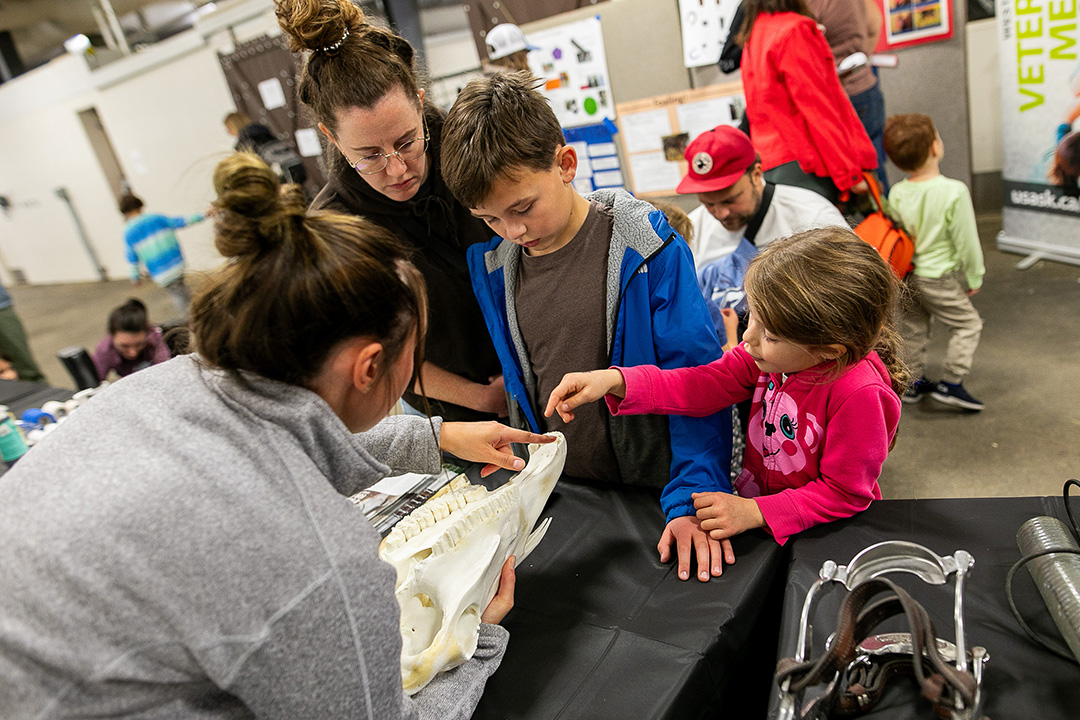
Students from the Western College of Veterinary Medicine (WCVM) are gearing up to host this year’s edition of Vetavision, which takes place from Sept. 25–26.
By Cat ZensHeld every two years, the student-run open house welcomes visitors of all ages to explore the diverse field of veterinary medicine through interactive displays, live demonstrations and hands-on activities.
Whether you're interested in animal health, considering a future career in veterinary medicine or simply looking for a family-friendly outing, there's something for everyone.
Katherine Dodgson and Nyla Hacault are third-year veterinary students who are also co-presidents for Vetavision 2026. They shared five things that people should know before attending the public open house.
1. Vetavision is a long-running WCVM tradition.
Vetavision is a long-running public outreach program at the WCVM, dating back to 1970, just one year after its first class graduated from the college’s veterinary program. Since then, generations of families have made the event a tradition.
Dodgson describes Vetavision as a “legacy event” at the college.
“When we were running our booths during our first year, I had people come to me and say, ‘this is my ninth Vetavision,” she said.
“[It’s something] that people expect every two years,” added Hacault.
2. Visitors can meet animals and watch live demonstrations.
Visitors can meet a wide variety of animals at Vetavision, such as cattle, horses, piglets and chicks. Local rescue organizations will also be present to share information about adopting out their animals!
One of the event’s biggest draws is the opportunity to see veterinary medicine in action. Throughout the two-day event, guests can attend demonstrations that showcase different aspects of veterinary care — from equine lameness evaluations to calving demonstrations using the college’s life-sized models of a cow and her calf.
Dodgson recommends that visitors tour the Rayner Dairy Research and Training Facility during Vetavision for a behind-the-scenes look at a working dairy operation. Hacault adds that the bovine hoof-trimming demonstrations are always a crowd favourite.
3. Vetavision highlights the many career paths in veterinary medicine.
One of the main purposes of Vetavision is to showcase the diversity of the veterinary profession.
Student-run exhibits cover topics ranging from veterinary oncology, medical imaging and animal welfare to wildlife health, theriogenology (reproduction) and pathology. Visitors can explore a variety of booths and learn how veterinarians contribute to animal health, food production, food safety and research.
This year also features a renewed aquaculture booth, where visitors can learn about aquatic animal health through interactive activities.
Many of the exhibits are led by students with a particular passion for their subject areas.
“[Students] are assigned to booths that they’re really passionate about, and they’re really looking forward to talking to people about their interest for veterinary medicine,” said Dodgson.
4. Pre-Vet Night is a valuable opportunity for future veterinary students.
High school and university students who are interested in enrolling at the WCVM can attend Vetavision’s popular Pre-Vet Night to hear from admissions representatives and current veterinary students.
Attendees can choose to attend in person or online, with in-person participants given the chance to tour the college’s veterinary teaching hospital.
Dodgson attended Pre-Vet Night before applying to the WCVM herself.
“It cemented in my mind that this is what I want to do, I want to pursue this,” she said. “It gave me a lot of confidence during the application process, hearing people speak about how they went through the same thing.”
Pre-Vet Night takes place from 4 p.m. to 9 p.m. on Saturday, Sept. 26, in Room 2302 at the WCVM. Visit the Vetavision 2026 web page for more details (advance registration required).
5. The entire event is organized by veterinary students.
Behind every Vetavision exhibit and demonstration are WCVM students who volunteer to bring the open house to life.
For Dodgson and Hacault, serving as co-presidents has been an opportunity to promote veterinary medicine and learn how different parts of the college work together.
“We just really wanted to be able to share why we like veterinary medicine so much,” said Dodgson.
The role has involved co-ordinating with teams across the college, from admissions and the WCVM Veterinary Medical Centre to the dairy barn and simulation lab. Hacault says the experience provides a rare behind-the-scenes look at the many moving parts involved in running a large public event.
“It’s a huge opportunity to be a part of a lot of different things,” said Hacault. “You get to experience the whole ‘behind the scenes,’ and there’s a lot going on.”
Want to attend Vetavision? Visit the Vetavision 2026 web page for more details.
Together we will support and inspire students to succeed. We invite you to join by supporting current and future students' needs at USask.